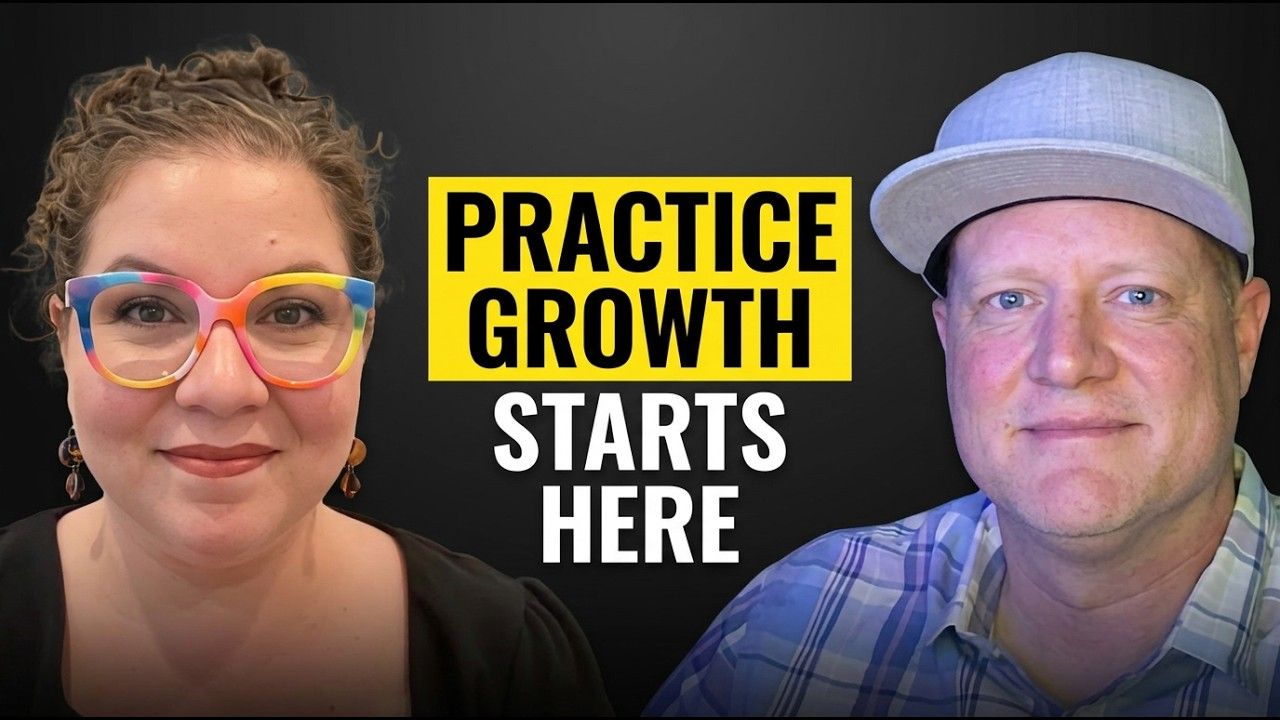
Exclusive Interview: Dan Johnson
Is your front desk drowning in insurance verifications, recall calls, and scheduling while patients wait? You're not imagining it — admin load is one of the quiet drains on a dental practice.
Most owners feel that squeeze, and it makes sense: clinical training rarely covers operations or staffing. On this episode of Behind the Bite , Dan Johnson — founder and CEO of Peak Performance VA — makes the case that trained virtual assistants can absorb routine admin so your in-office team can focus on patients. Below is his story, his framework for human versus AI support, and a few practical first steps.
Here's what stood out: where Dan came from, how he thinks about people and technology, and what to check before you hire any kind of remote support. Watch the full conversation here.
1. An unusual road into dentistry
Dan's background is the opposite of typical. He spent fifteen years owning and operating multiple KFC franchises, where he learned systems, staffing, and the daily grind of a service business.
From there he moved into dental, helping expand Acre Wood Dental from a small four-operatory office into a multi-location group across Central Texas. He later built Lucent Spot, a dental marketing agency, before co-founding Peak Performance VA with two dentists, Dr. Chad Latino and Dr. Benjamin Johnson. That cross-industry path is the lens for everything he says next.
2. Why he says every business runs on people
Dan's core belief is simple: fast food or healthcare, the work comes down to people. Patients remember how a practice made them feel, and staff stay where they feel supported.
That's the frame for how he positions virtual assistants. The goal isn't to remove humans — it's to take repetitive tasks off your team so the people in your office have more room for the patient in the chair.
3. What a dental virtual assistant actually does
According to Dan, the work is administrative and repeatable — the tasks that pull a front desk away from patients. His team trains assistants on dental terminology and matches them to a practice's management software.
- Answering calls and front-desk support
- Scheduling, confirmations, and recall / re-care outreach
- Insurance verification, predeterminations, and claims follow-up
- Payment collection and basic billing support
Action step: list the routine tasks that eat your team's day. Those are the first candidates to hand off.
4. AI vs. human support: a complement, not a replacement
Dan draws a clear line between automation and people. AI is fast and inexpensive for high-volume, rote tasks; trained humans handle nuance, complex calls, and the trust that patients expect.
His recommendation is a hybrid: let automation handle reminders and simple checks, and keep people on anything that needs judgment or empathy. Used together, he argues, they free your team without flattening the patient experience.
5. Data security and HIPAA: how Dan frames it
Security is the first question owners ask about remote support, and Dan addresses it head-on. He says Peak Performance VA screens and trains assistants on data privacy, keeps patient data inside the practice's own systems, and runs routine audits.
Treat these as the company's described practices, not a guarantee — and do your own diligence. Whatever provider you consider, ask how data is handled, who has access, what training and background checks are in place, and how compliance is monitored over time.
6. Practical first steps for owners
- Find your bottlenecks — scheduling, verification, billing, recall.
- Vet providers on industry experience and security practices, not price alone.
- Start with one role, set clear expectations, and measure results.
- Invest in onboarding so the assistant learns your software and tone.
- Keep the human touch where it matters most — patient-facing moments.
The takeaway
Dan's story is a reminder that operations and care aren't at odds. The right support — human and automated — can give your team back the time that patient relationships deserve.
Want to see how this maps to your practice? Watch the full conversation or learn more at peakperformanceva.com.
FAQ
What does a dental virtual assistant do?
A trained remote professional handles administrative work — calls, scheduling, insurance verification, recall, and billing support — inside your practice management software, without adding in-office staff.
Can AI replace a human virtual assistant?
Per Dan, no. AI is strong for fast, repetitive tasks, but human assistants handle complex situations and the trust patients expect. He recommends using both.
How is patient data kept secure?
Dan says his team screens and trains assistants on privacy, keeps data within the practice's systems, and audits regularly. Confirm any provider's specific safeguards before you sign.
How quickly can support start?
Dan describes a short onboarding window once a practice's needs and software are mapped. Timelines vary by practice.
Partnership Disclosure: Behind the Bite is part of the Behind the Premium network, produced in partnership with Dental Skool, a free educational community for dental professionals. This is a promotional collaboration, not a paid sponsorship. Disclosed in accordance with FTC guidelines.
Disclaimer: The content shared on this series, part of the Behind the Premium network, is provided for general educational and informational purposes only. Discussions of employee benefits, health plans, insurance, coverage, claims, costs, and related topics are general in nature and are not financial, insurance, tax, legal, or benefits-planning advice, and should not be relied upon for any specific decision. Benefit plans, coverage options, pricing, and applicable regulations vary by individual, employer, and location, and change over time. Engaging with this content does not create a professional, advisory, broker-client, agent, or fiduciary relationship of any kind. Always consult a licensed insurance broker, benefits advisor, attorney, tax professional, or other qualified expert before making decisions about your benefits, coverage, or finances. Statements made by hosts, guests, and panelists — including any who are owners, employees, or representatives of a partner company — are their own. You are solely responsible for any decisions or actions you take based on this content. To the fullest extent permitted by law, the hosts, guests, panelists, and Behind the Premium disclaim any and all liability arising from your use of or reliance on this content. Any references to dental or medical topics are general and are not a substitute for advice from a licensed dentist or physician.
Recent Posts